Cleansers and Exfoliators3 min read
Why Gentle Exfoliation Is the Secret to Brighter Skin
By Frances Martin

There is a reason dermatologists consistently rank exfoliation among the most impactful steps you can add to your skincare routine. When done correctly, it transforms dull, congested skin into something visibly brighter and smoother. When done incorrectly, it can cause irritation, redness, and long-term damage.
The key word is gentle. And understanding why makes all the difference.
Why Dead Skin Cells Dull Your Complexion
Your skin naturally sheds dead cells through a process called desquamation. In your 20s, this cycle takes about 28 days. By your 40s and beyond, it can take 45–60 days. The result? A buildup of dead cells on the surface that makes your skin look dull, uneven, and tired.
This dead cell layer also prevents your serums and moisturizers from penetrating effectively. You could be applying the best products in the world, but if they are sitting on top of dead skin, they cannot do their job.
Scrubs, Peels, and Masks: What’s the Difference?
Physical Scrubs
Physical scrubs use small particles to manually buff away dead cells. The critical distinction is between gentle, finely milled scrubs and harsh, jagged-particle scrubs. Gentle scrubs with smooth, uniform particles effectively remove surface buildup without creating micro-tears in your skin.
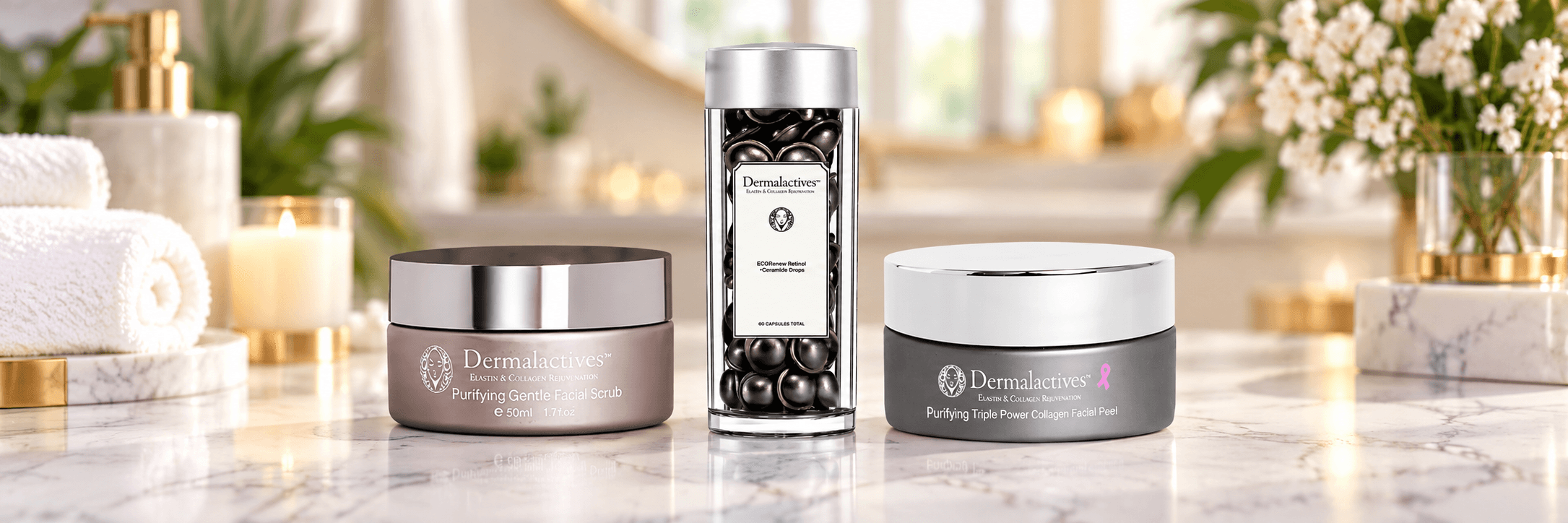
The Dermalactives Purifying Gentle Facial Scrub is formulated with this principle in mind: effective exfoliation that respects your skin barrier.
Chemical Peels
Chemical exfoliants use acids (AHAs like glycolic acid, BHAs like salicylic acid) to dissolve the bonds between dead cells. They work without any physical friction, making them ideal for sensitive skin or areas prone to irritation. At-home chemical peels are typically gentler than professional treatments.
Exfoliating Masks
Exfoliating masks combine the benefits of both approaches, often pairing gentle acids with physical elements or enzymatic exfoliants. They sit on the skin for a set period, allowing active ingredients to work before being rinsed away. Masks tend to be less intense than standalone peels.
How Often Should You Exfoliate?
This depends on your skin type and the type of exfoliant you are using:
- Normal to oily skin: 2–3 times per week with a gentle scrub or mild chemical exfoliant
- Dry or mature skin: 1–2 times per week, focusing on hydrating exfoliants like lactic acid
- Sensitive skin: Once per week with the gentlest option available—enzyme-based products work well
- Combination skin: 2 times per week, potentially using different methods on different zones
Signs You’re Over-Exfoliating
More is not better when it comes to exfoliation. Watch for these warning signs:
- Persistent redness or irritation that does not resolve within a few hours
- Increased sensitivity to products that previously felt fine
- Skin that feels tight, waxy, or unusually shiny
- Breakouts in areas that are normally clear
- A compromised moisture barrier (stinging when applying moisturizer)
If you notice any of these signs, pause exfoliation entirely for at least a week and focus on hydrating, barrier-repair products.
The Gentle Exfoliation Approach
The most effective long-term strategy is consistent gentle exfoliation rather than occasional aggressive treatments. Think of it like exercise: regular moderate activity produces better results than sporadic intense sessions.
- Start with once per week and observe how your skin responds
- Increase frequency gradually if your skin tolerates it well
- Always follow exfoliation with hydration and sun protection
- Never exfoliate sunburned, broken, or actively irritated skin
What to Expect
With consistent gentle exfoliation, most people notice brighter, more even skin within 2–4 weeks. Texture improvements typically follow within 4–6 weeks. These are gradual, sustainable changes that compound over time—which is exactly what you want from a skincare step you plan to maintain long-term.
Tags:#Exfoliating#Brightening